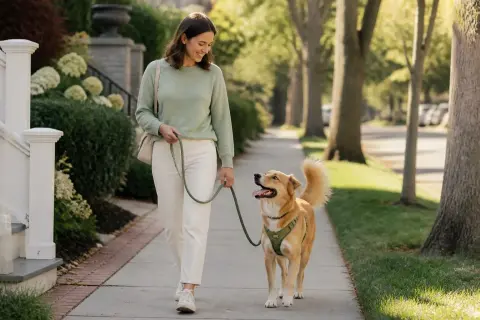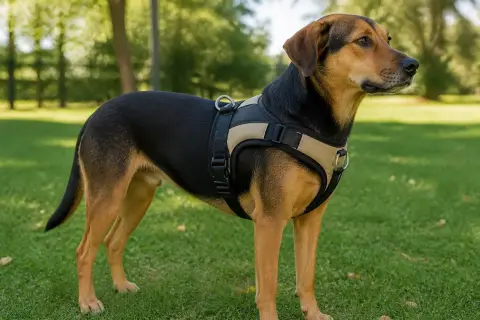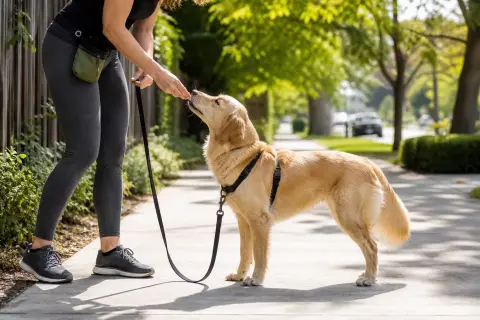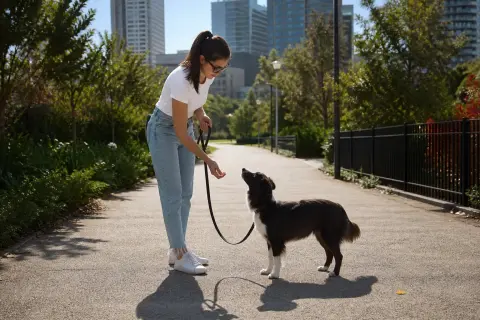
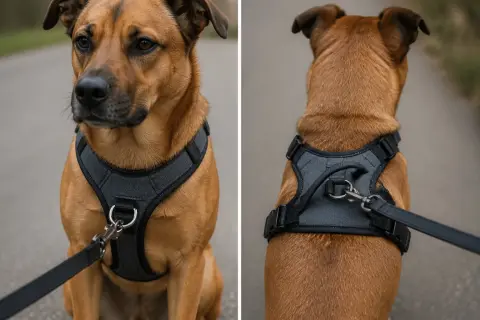
Front-clip vs. back-clip harnesses is not a morality play — it is a steering-column decision. Back-clip feels like a comfortable backpack attachment for dogs who already walk kindly. Front-clip adds leverage when forward surge is the default personality. Many of the best everyday harnesses offer both rings so you can match the clip to the lesson, not the dogma.
This comparison sits under our Complete Guide to Walking & Training. Product roundups: Best Dog Harnesses and loose-leash tools. Behavior plan: How to Stop Pulling on Walks.
Who this guide is for
Owners staring at two metal rings like they are choosing a political party, pullers mid-rehab, hikers who want a handle and back-clip freedom, and anyone told “just get a no-pull harness” without a training plan. Spoiler: the clip helps; the paycheck teaches.
When front-clip earns its keep
Front-clip earns its keep when the dog consistently turns walks into tractor trials. Pressure at the chest redirects momentum sideways, buying you a beat to mark softness and reinforce. It is ideal for neighborhood training blocks, adolescent enthusiasm, and rehab weeks where back-clip still feels like attaching a sled.
Dedicated no-pull style: PetSafe Easy Walk — designed around that chest redirect. Fit carefully; a crooked Easy Walk invents armpit drama.
Dual-clip training days: clip the leash to the front ring of a Ruffwear Front Range or Blue-9 Balance while you practice, then move to the back ring for calm stretches or hiking control. Same jacket, different conversation.
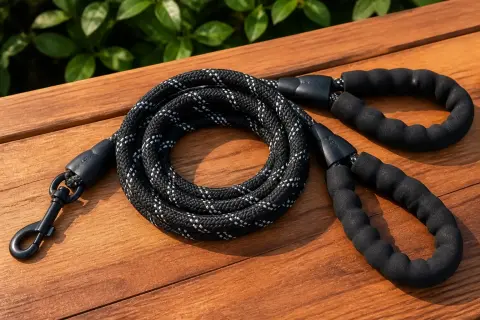
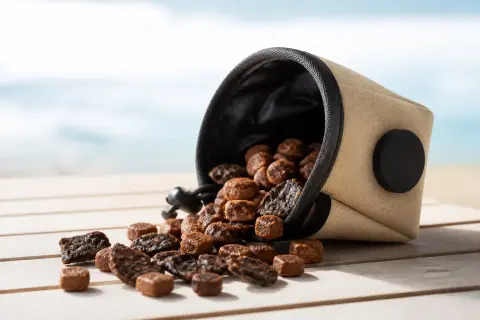
Always pair with fixed length — TwoEar 6ft — and fast treats from a Mighty Paw or EzyDog SnakPak. Soft bits: Blue Buffalo Bits. Hard distractions: Vital Essentials liver. Marker: PetSafe Clik-R.
When back-clip is the better default
Back-clip shines for polite walkers, structured hiking, and dogs who panic if the leash crosses their chest strangely. It distributes force across the harness body and pairs cleanly with a dorsal handle for scramble assists. If your dog already offers soft leash most of the time, back-clip is comfort without unnecessary steering.
Long-line recall work often prefers back-clip so the line trails cleanly — Tuff Pupper 30ft in safe spaces. Leash guide: Best Dog Leashes.
Hybrid walks that make sense
- Front-clip for the first spicy block past the dog park gate; back-clip once the brain returns
- Back-clip for trail miles; front-clip for the parking-lot circus
- Front-clip during dedicated training sessions; back-clip for decompression sniffaris
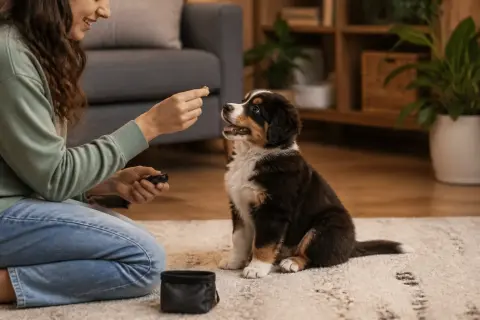
Write the plan down so household members do not invent conflicting clip philosophies mid-walk. Puppy foundations: How to Start Puppy Training and Best Puppy Training Tips.
Fit still beats clip mythology
- Two fingers under straps; no throat pressure
- Chest strap sits above the shoulders, not strangling the armpits
- Dog can trot and sniff without the harness rotating into a sash
- Check for rubs after ten minutes on new gear
Wrong size + any clip = new problems. Harness shopping: Best Dog Harnesses.
What neither clip replaces
Neither clip replaces reinforcement, sniff budgets, or veterinary care. A front-clip without soft-leash pay just invents a diagonal tow truck. A back-clip on a dedicated puller without training is an arm workout with better branding. Full reset: stop pulling. Tool mindset: loose-leash tools.
Bring bags regardless of clip — Earth Rated or Amazon Basics.
Myths worth retiring
- “Front-clip is cruel.” Poor fit is cruel. A well-fitted front clip is temporary steering while you teach.
- “Back-clip causes pulling.” Reinforcing pulling causes pulling. Back-clip is fine for polite dogs.
- “One clip forever.” Dual-clip harnesses exist so you can graduate and still keep options.
If the dog coughs, freezes, or claws the chest strap raw, stop and refit — or switch designs. Training plan still required: stop pulling.
Quick decision cheat sheet
- Mostly polite + hiking: back-clip on Front Range or Blue-9
- Active puller + training plan: Easy Walk or front ring + treats
- Mixed week: dual-clip harness, change rings with the job
- Long-line recall days: usually back-clip so the line trails cleanly
New puppies: start with dual-clip comfort and short sessions — How to Start Puppy Training — before you specialize the steering.
Transition plan when manners improve
As soft-leash steps dominate, spend more of the walk on back-clip. Keep front-clip available for known hotspots. Do not throw the Easy Walk away on day three of progress — keep it for spicy routes. Celebrate with the same treats that built the habit: training treats.
Our recommendations
Shop walking & training. Links may earn a commission — advertising disclosure.
- Ruffwear Front Range — Dual-clip everyday classic.
- Blue-9 Balance — Adjustable front/back training fit.
- PetSafe Easy Walk — When front-clip is the main job.
- TwoEar 6ft — Honest length for either clip.
- EzyDog SnakPak Pro — Pay the soft leash either way.
Return to the Walking & Training hub — then pick the ring that matches today’s lesson, not yesterday’s argument.